Table Of Content

It makes sense and is typical for a company’s storage and processing area to expand as demand increases. Implement an effective warehouse layout design by making adjustments to ensure you make the most of your resources. However, it might negatively impact your supply chain, workflow, and shipment timeframes if you aren’t using the available warehouse space efficiently. Now that you know how to plan a warehouse layout, it will be easier to verify your design. Warehouses run well when the design and equipment is suited for the complex needs of your business. Check out the benefits of ERP to understand how the software can improve your warehouse management process.
Importance of Strategic Storage Zones
The cubic approach to warehouse design - MHD - MHD Supply Chain
The cubic approach to warehouse design - MHD.
Posted: Tue, 21 Feb 2023 08:00:00 GMT [source]
All of these can be reduced or completely avoided through the implementation of an efficient warehouse layout. An optimized warehouse space helps reduce cognitive fatigue by making the process easier to understand and execute. If we look at the diagram above, popular items in zone 3 should be placed near the top left corner, and items purchased infrequently should be stored near the bottom right corner. Items that are frequently purchased together should be stored close together, too, to reduce the number of steps a picker must take to assemble common orders. Implement conveyor systems and automated sorting solutions to meet the demands of high-velocity order processing. Enhanced Picking Technologies introduce a new level of flexibility and adaptability to order picking operations.
key things to consider when designing a warehouse layout
Involve key stakeholders, including warehouse staff and inventory managers, in the assessment process. Their firsthand knowledge of daily operations and product handling nuances adds a practical dimension to the assessment, ensuring that the layout design aligns with operational realities. This option can achieve the necessary handling speed, as there is no need for the vehicles to back up to the building. The use of different types of equipment in your warehouse, such as lifting & packing tools, pallet racks, or conveyors, can influence the layout design. By identifying the equipment needed, you can evaluate and design the most suitable layout according to your requirements and boost the productivity of your facility.
Number and type of products/materials processed
The result is a bird’s-eye view that enhances visibility and operational oversight. Autonomous Mobile Robots, or AMRs, emerge as stalwarts of efficiency in the modern warehouse landscape. These nimble robots navigate autonomously through the warehouse floor, orchestrating a seamless ballet of goods movement. Their adaptive intelligence enables dynamic route planning, avoiding obstacles and optimizing travel paths. Empower the workforce with continuous training initiatives focused on emerging technologies, updated workflows, and optimized layout procedures.
Warehouse Setup Project Plan Examples
Don’t forget to consider keeping your team’s general well-being and safety concerns to a minimum. An L-shaped warehouse layout is designed to increase visibility and cross-departmental communication. Shipping docks are placed on one side of the L with receiving docks on the other. Inventory, staging areas, and any offices are then placed in the corner opposing the L.
Strategic warehouse design and layout offers a wealth of advantages for owners and managers. This meticulous approach to planning your facility and exterior space boasts a variety of benefits, both now and down the line. Safety should be a prime consideration in all warehouses—though it may be more complex in manufacturing, where movement occurs around equipment. The Occupational Safety and Health Administration (OSHA) offers detailed publications to review in planning your warehouse safety initiatives. The areas of the warehouse are laid out with the main storage area sitting in the base of the L and the shipping and receiving docks at either end of the two legs.
Step 5: Harnessing Vertical Space
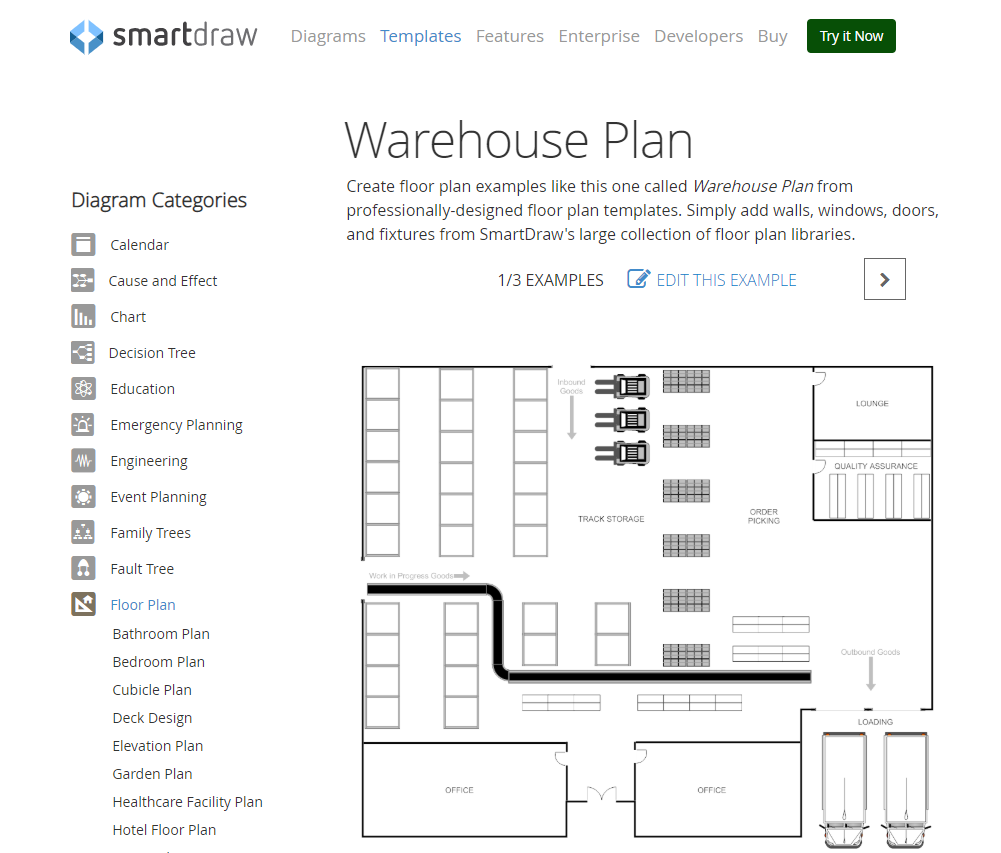
The warehouse layout is greatly influenced by the available space and how things will flow throughout the entire operation. Not only does SmartDraw cost a fraction of expensive CAD programs, but you can be drawing a warehouse layout & design just minutes from right now. Although some of the equipment used in the warehouse is the same, some may vary in quantity and size. If your space is large enough, your warehouse shelving layout can be multiple rows of tall shelves.
Plan for Growth and Adaptability
Tailor the vertical space utilization strategy to accommodate the characteristics of the stored items. This may involve adjusting shelf heights, selecting appropriate racking systems, and ensuring compatibility with material handling equipment. In conclusion, Step 4 of the warehouse layout design process involves the meticulous optimization of aisle width.
Revised Design – Bunnings Warehouse – Sandgate Road, Virginia - Your Neighbourhood
Revised Design – Bunnings Warehouse – Sandgate Road, Virginia.
Posted: Wed, 21 Jun 2017 07:00:00 GMT [source]
Does your design take equipment space into consideration?
Additionally, you can decide whether to parent through significant national and international airlines, local parcel carriers, or a combination of all three. After deciding which carriers to work with, you can arrange pick-up times and negotiate shipping costs. Your warehouse team is in charge of loading the trucks and ensuring that every order is correctly picked, packed, and sent when it leaves the warehouse. Ensure your warehouse has enough space to support many orders being loaded at once. When selecting a picking method, facility managers and business owners must be cautious because it can make or break the efficiency of warehouse operations.
Employees should be trained on proper handling procedures as well as safety protocols such as the use of protective gear or specialized storage containers. You should allocate a specific area of your warehouse for storing hazardous materials and make sure that it is clearly marked. You should also check for any areas of your warehouse that are particularly prone to damage from moisture or other elements. This is a factor most warehouse managers don’t consider, but the temperature and humidity levels in your warehouse can have a significant impact on your inventory.
The goal of a warehouse schematic is to arrange every element to create an efficient, productivity-boosting traffic flow. As you get started on your warehouse layout planning and design process, it’s important to think big. If you limit yourself to one size, then you’ll be limiting yourself to how large your warehouse operations can grow. Planning out a picking workflow ahead of time will help you get your warehouse up and running on the right foot.

From there, you can quickly share your equipment inventory and relevant notes with maintenance personnel for additional context. And this visual inventory management feature also makes it easy for maintenance staff and personnel to find specific machinery in your facility. And with a comprehensive 3D model and schematic floor plans in hand, you can easily train employees on the warehouse’s emergency procedures. Use your floor plans to create and share emergency routes, response strategies and safety standards. If the facility owner didn’t consider layout when ramping up their warehouse, all that square footage probably isn’t being used as efficiently as possible.
Then, you can plan for equipment, create production and workflow zones, and establish storage areas. This option is best used in warehouses where only one of the two functions is carried out, i.e. where goods are loaded or unloaded. This option can achieve the necessary handling speed, as there is no need for the trucks to back up to the building.
This can reduce motion waste and make it easier for workers to complete tasks. This way, workers can quickly identify the right product to pick without making any mistakes, which will reduce the time spent on picking each item. In the world of picking and packing, time is measured in seconds, not minutes. In addition to keeping up with the latest technology and automation, one of the simplest ways to optimize your warehouse is by regularly cleaning, organizing, and auditing it. These structures are like extra floors that can be installed in a warehouse to create more shelf space, offices, or storage areas.
By creating the proper aisle widths, you can ensure that your warehouse is safe and efficient. Because in Sweden, the company’s country of origin, smaller spaces are more the norm. Alright, I’ve thoroughly argued for the benefit of a well-designed and laid-out warehouse. Now, let’s get into the nitty-gritty of the practical ways you can make this happen in your own organization. Either way, an optimized warehouse helps you get to the bottom of any unnecessary space, so you can make the necessary changes and save money in the long run.


No comments:
Post a Comment